Summary
- Specific challenges of managing a rental chalet remotely in Quebec
- The technological tools that simplify remote management
- The local team, the irreplaceable human link
- Comparing remote management models
- When to consider delegating entirely
- Building a sustainable routine, even remotely
- Conclusion
- FAQ
You live in Montreal, Quebec City, or even abroad, and your chalet is two hours or more away. The prospect of managing the rental remotely raises all kinds of questions: what happens if something breaks down in the middle of the night? How do you welcome guests you’ll never meet in person? Who handles the cleaning between stays?
The good news is that managing a rental chalet remotely in Quebec is much more accessible today than it was ten years ago. Digital tools have matured, networks of local service providers have become more organized, and contactless check-in protocols are now standard in the market.
This guide brings together concrete solutions that allow an absent owner to operate their chalet with peace of mind, without turning every weekend into an operational crisis center.
Specific challenges of managing a rental chalet remotely in Quebec
Before diving into solutions, it’s worth naming what makes remote management particular. The most frequently reported challenges by owners are:
- Operational surprises: heating breakdowns in the dead of January, water leaks, a guest who can’t get in.
- Ongoing communication: travelers send messages at all hours, and response times directly affect your listing’s ranking on the platforms.
- Cleaning between stays: the slightest coordination error can trigger a negative review.
- Monitoring the chalet’s condition: without regular visits, small problems pile up until they become costly.
- Regulatory compliance: complying with the Tourist Accommodation Act remains your responsibility, even from afar.
These challenges are not insurmountable. They simply require the right tools and, in many cases, local support to rely on.
Before building your own network of service providers yourself, check whether a specialized team isn’t already active in your area. Evaluate the remote management options available for your chalet before investing months into structuring a solo operation.
The technological tools that simplify remote management
To manage a rental chalet remotely in Quebec, today’s available technology lets you monitor, communicate, and automate a large share of operations without a physical presence.
Smart locks and contactless access
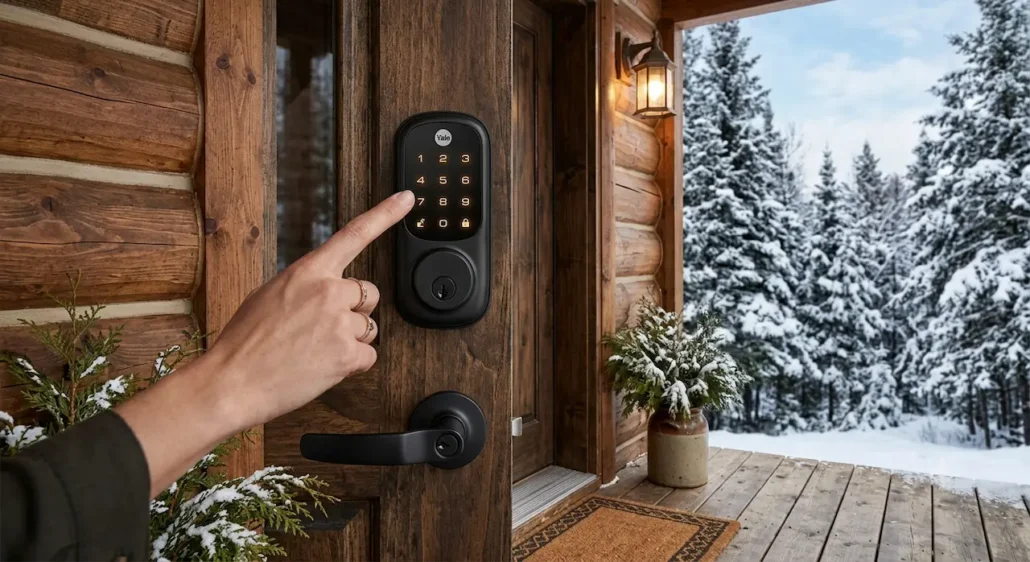
A smart lock lets you generate unique codes for each reservation, valid only during the stay period. No more lost keys, no more coordinating arrival appointments. The leading models used in short-term rentals integrate directly with Airbnb and Vrbo, which automates code creation the moment a reservation is confirmed.
Connected sensors and thermostats
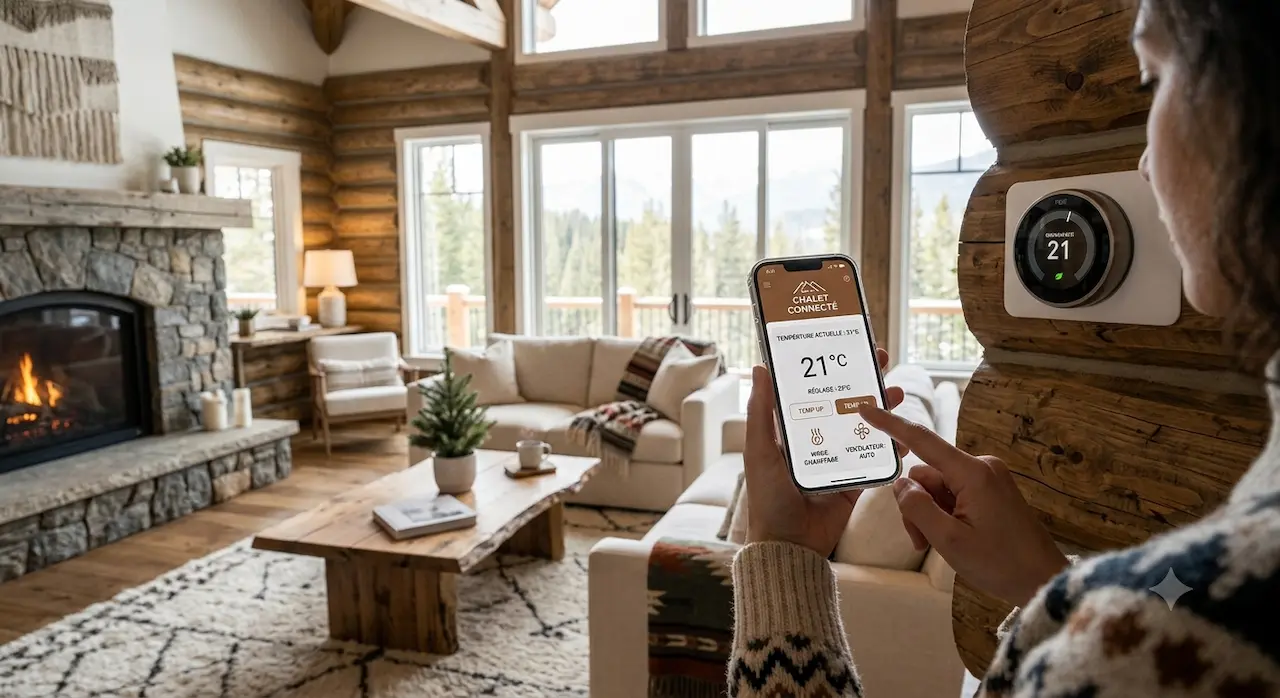
Smart thermostats let you maintain a minimum temperature in winter to prevent frozen pipes, while remotely tracking consumption and anomalies. Water sensors placed near sensitive points (water heater, sinks, washing machine) trigger an alert as soon as a leak is detected. This is one of the most cost-effective protections against water damage, which is among the most frequent claims according to the Insurance Bureau of Canada.
Outdoor cameras and alarm systems
Camera installation is regulated: they must be disclosed in the listing and must never monitor interior spaces. Used properly, though, they let you check the condition of entrances, parking, and access to the dock or spa.
Centralized management platforms
Property management system-type tools centralize calendars, communications, payments, and financial reports. They sync availability across multiple platforms to avoid double bookings and send automated messages at key moments during the stay.
The local team, the irreplaceable human link
To manage a rental chalet remotely in Quebec, no digital tool replaces a trusted human presence. This is probably the aspect most underestimated by owners who go it alone.
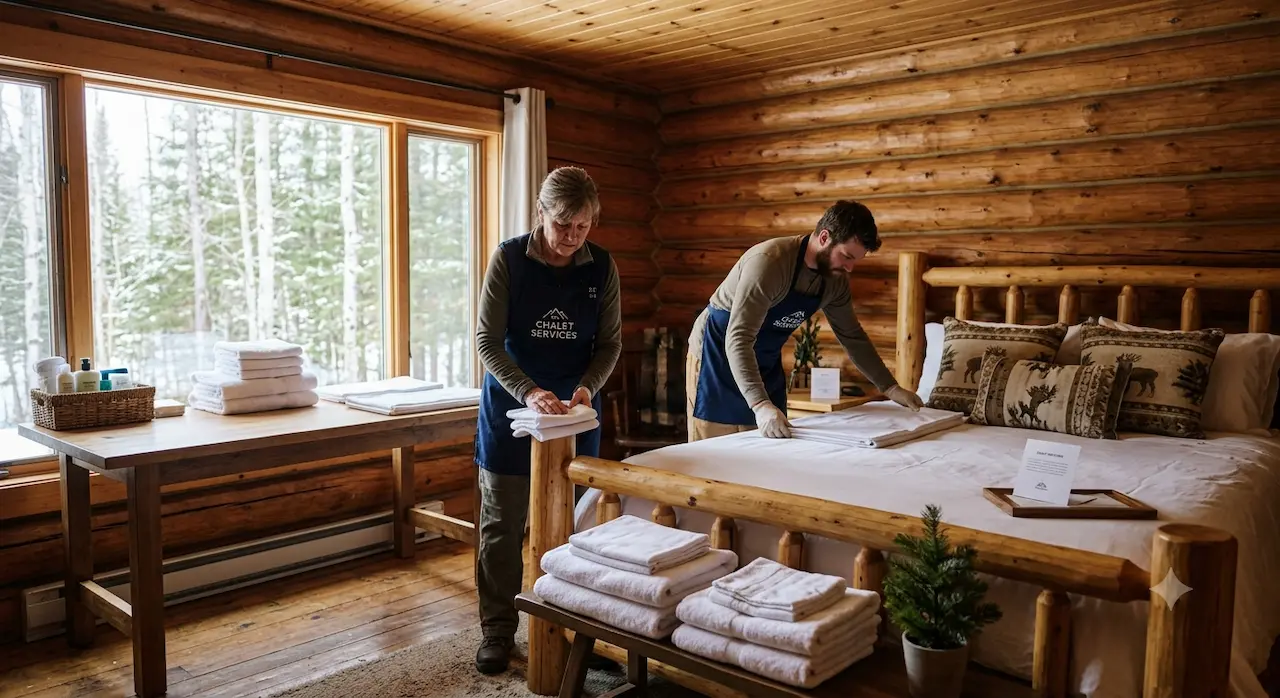
Several roles need to be covered, regardless of the approach chosen. First, cleaning and preparation between stays, with quality control after each turnover. Add to that snow removal and grounds maintenance depending on the season, and above all, a point of contact for emergencies.
Building this network takes time. Good service providers are in demand, already busy during peak season, and tourist regions such as the Laurentians, Lanaudière, or Charlevoix have a smaller pool of providers than urban areas. This is one reason why many owners turn to an agency that already has an established network on the ground.
Comparing remote management models
There are several ways to manage a rental chalet remotely in Quebec, each with its own constraints and benefits. The table below summarizes the main options.
| Model | Owner involvement | Operational risk | Suited for |
| Full remote self-management | Very high | High | Owner nearby, highly available and comfortable handling every surprise alone |
| Self-management with occasional service providers | High | Medium to high | Owner willing to stay reachable at all times and coordinate each provider |
| Local co-management | Medium | Low to medium | Owner who wants to keep control over decisions without managing day-to-day operations |
| Professional rental management | Low | Low | Owner who wants to protect their income and property value without dedicating their time to it |
For an owner living in Montreal with a chalet in Mont-Tremblant, full self-management can work for the first few years, especially if the property is modern and well maintained. But once the calendar fills up, management becomes a part-time job. This is usually the point at which delegation makes full sense.
For a more detailed comparison between self-management and delegating to a professional, check out our article Airbnb, VRBO, or Private Management.
When to consider delegating entirely
Several signals indicate it’s time to move from partial management to full management by an agency:
- you live far from the chalet and only visit a few times a year;
- communications with travelers are encroaching on your work or family life;
- you’ve experienced one or more poorly handled emergencies (frozen pipes, a locked-out guest, a late complaint);
- your occupancy rate is stagnating despite decent photos and a good location;
- you’re considering acquiring a second chalet and your current workload is already maxed out.
A local agency then acts as your eyes and ears on the ground. It handles turnover between stays, responds quickly to unexpected issues, monitors the property between rentals, and sends you clear reports. To explore what this type of service concretely involves, read our guide on rental management agencies in Quebec.
Building a sustainable routine, even remotely
Whether you manage alone or with help, the sustainability of the operation rests on a clear routine. Several items should be on your annual calendar: a full inspection of the chalet in spring and fall, an agile pricing review based on the time of year, seasonal photo updates, a check of insurance policies before each peak season, and a financial review at the end of each quarter to adjust strategy.
This discipline, more than any tool or service provider, is what distinguishes owners who last over time from those who burn out within two or three seasons.
Conclusion
Managing a rental chalet remotely in Quebec is no longer an insurmountable challenge. Smart locks, sensors, management platforms, and well-organized local teams now allow an urban owner to run a professional rental without setting foot there every week.
The deciding factor remains the quality of human support on the ground. A trusted local agency or co-manager makes the difference between a rental that runs smoothly and an ongoing series of small crises to handle from afar.
To assess the solution best suited to your chalet and your situation, get a personalized assessment from a team specialized in rental management in Quebec.
FAQ
How do you manage a rental chalet remotely in Quebec without going there every week?
To manage a rental chalet remotely in Quebec, you need to combine three elements: digital tools (smart lock, connected thermostat, water sensors, management platform), a network of reliable local service providers (cleaning, maintenance, snow removal), and a regular inspection routine. Many owners eventually choose to delegate to a local agency that takes charge of all operations and serves as a reliable intermediary with travelers.
What are the main emergencies to anticipate for a chalet rented remotely?
The most common emergencies are winter heating failures, water leaks, appliance breakdowns, access issues (faulty lock, expired code), and neighbor complaints. Anticipating these situations means having connected sensors that alert in real time, insurance suited to short-term rental, and a local contact able to respond quickly within a few hours at most.
Is it better to hire a co-manager or an agency for a chalet rented remotely?
The choice depends on your booking volume and personal availability. A local co-manager suits an owner who wants to retain control over strategic decisions and has time to manage communications. A professional agency takes on the entire mandate, from marketing to maintenance, which better suits owners who are far away or have a busy schedule.